How to Recognize Fake Air Jordan Sneakers: Definitive Authentication Guide
Let’s jump right in — the replica shoe market is undeniably huge, and Air Jordans are the number one target. Sector estimates suggest that replica sneakers make up approximately $450 billion in global trade every year, and Jordan Brand shoes account for a massive portion of that number. Whether you’re shopping from a re-seller, an online platform, or even a brick-and-mortar shop that appears a little sketchy, knowing how to check your pair is essential — it’s crucial. I’ve with my own eyes reviewed countless of pairs over the years, and the knockoffs have become disturbingly realistic, especially since 2024. This article explains every inspection point I use when checking Air Jordans, from the packaging to the outsole and every element. Bookmark this one, because it could rescue you from spending $250 on a pair of kicks that cost someone $12 to produce.
Open With the Box: Your First Line of Verification
Before you even handle the kicks, the packaging itself contains a story that replica makers often fail to replicate. Legitimate Jordan packaging have a characteristic heft and tactile quality to the packaging material — it’s firm, with a faint matte coating that seems upscale to the touch. Examine the sticker on the end of the box for the correct SKU, size, and colorway designation, air jordan then compare this details against Nike’s official product database or trusted sources like Nike.com. The text on genuine labels is clean and consistently spaced, while replicas frequently feature uneven spacing, marginally heavier text, or incorrect font thickness. Pay close attention to the UPC code — scan it with any barcode scanner and make sure it pulls up the correct product data. The tissue paper inside genuine boxes also has a specific feel and weight; replica packaging frequently uses flimsier, poor-quality paper that rips more readily. Many skilled experts can identify a counterfeit within 30 seconds just by looking at the box, so never bypass this important opening step.
Checking the Shoe Craftsmanship and Materials
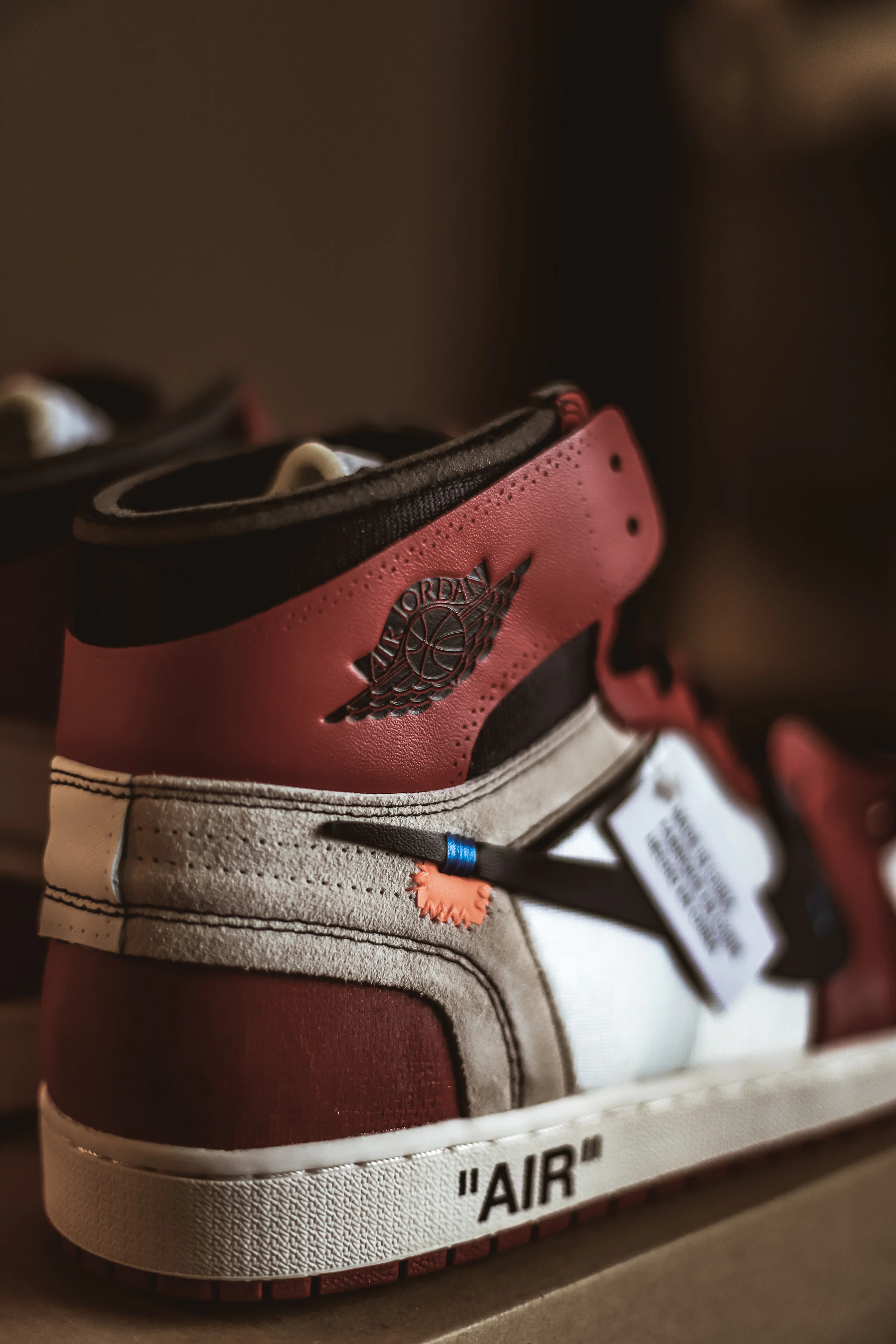
Pick up the sneaker and feel the leather — legitimate Air Jordans use high-quality fabrics that have a supple, regular grain pattern across the full upper. On the Air Jordan 1, authentic leather panels should feel pliable but firm, not plastic-like or unnaturally stiff, and the tumbled panels on specific colorways should have a authentic, non-uniform texture rather than a printed, identical pattern. Stitching is one of the most reliable tells: authentic pairs display precise, consistent stitches with no hanging threads, fraying, or uneven gaps. Tally the stitches on important sections like the swoosh and the wing panel — Nike uses exact stitch numbers that change by silhouette and size, and counterfeiters seldom hit these perfectly. The overall shape of the sneaker counts too; legitimate Air Jordan 1s have a signature hourglass profile when looked at from the rear, while many knockoffs appear unnaturally straight or square. Drag your finger along the sole edge where it joins the upper — authentic shoes have neat, even attachment with no noticeable glue stains or spaces.
The Bottom and Air Unit: Elements That Fakes Botch
Rotate the shoe over and inspect the sole pattern closely against reference images from legitimate releases. Legitimate Air Jordan outsoles have precise grip patterns with sharp lines and uniform channel depth across the entire bottom. The rubber compound on real pairs has a particular firmness and subtle see-through quality on certain models (like the Air Jordan XI’s icy sole) that fakers struggle to duplicate accurately. Apply pressure hard on the heel area to assess the Air unit — legitimate Nike Air cushioning has a specific compression feel that budget foam fillers are unable to replicate. On models with exposed Air chambers, like the Air Jordan 3, 4, or 5, examine the Air capsule for transparency, correct sizing, and correct alignment within the midsole cavity. The Jumpman icon on the outsole should be crisply defined with no bleeding or imperfections in the lines, and on the Air Jordan 3, the body ratios of the figure should correspond to verified photos perfectly. Color matching between the outsole and mid-section is another giveaway — replicas frequently have minor shade mismatches that are immediately noticeable when placed side by side with genuine pairs.
Tags, Labels, and the Nike Size Tag Examination
For obvious reasons, the inner size tag is probably the most heavily examined feature in shoe verification — it contains layers of confirmable details. Genuine Nike sizing labels display specific lettering, spacing, and formatting that change periodically, so you need to verify against tags from the same manufacturing window. The tag should contain the correct style code matching the box, a production date that fits within the recorded release timeline, and plant codes that match legitimate Nike manufacturing facilities. In 2026, Nike sizing labels typically include a scannable QR code alongside the classic barcode — check both and check they link to real product information. The text quality should be crisp with no bleeding, and the tag substrate itself should feel sleek and slightly waxy, not rough or flimsy. I always advise photographing the tag under a loupe and checking it against verified genuine pairs from archives run by authentication services like CheckCheck or Legit Check. If any one element on the size tag seems incorrect — wrong font, wrong spacing, odd material — consider it as a serious concern important enough to rethink the deal.
The Smell Test and Other Non-Visual Inspections
Skilled sneakerheads know that authentic Air Jordans have a characteristic smell that’s practically extremely difficult to fake, even though this might seem unusual if you’re a beginner at shoe verification. Real Nike products have a subtle, faint rubber and leather odor that results from the exact ingredients and adhesives used in Nike-contracted factories. Fake kicks often stink of acrid industrial chemicals, intense industrial glue, or have an sprayed-on “fresh shoe” smell that’s been added to hide production odors. Beyond smell, check the mass of the shoes — genuine pairs within the same model and size should be within a couple of grams of each other, and many legit-check guides provide verified weight specs for frequently faked models. Flick the midsole softly and listen; genuine Air technology creates a somewhat hollow, resonant sound, while solid foam replicas typically make a more muted sound. Examine the inner lining for even texture — authentic pairs have neatly installed inner linings without gathering, wrinkles, or showing bonding agent. These sensory tests reinforce the optical examination and supply further information that solidify your overall assessment.
| Authentication Checkpoint | What to Look For | Common Fake Giveaways |
|---|---|---|
| Box and Labels | Correct style code, crisp fonts, matching barcode | Uneven text, wrong font weight, non-scanning barcodes |
| Upper materials and leather quality | Supple grain, consistent texture across panels | Synthetic rubbery feel, uniform pressed patterns |
| Stitching | Even spacing, correct stitch count, no loose threads | Uneven gaps, loose threads, mismatched thread colors |
| Sole | Precise traction pattern, correct rubber firmness | Faint grooves, incorrect rubber formula, shade difference |
| Interior label | Correct fonts, valid QR/barcode, proper factory codes | Blurry text, incorrect kerning, non-functional QR codes |
| Air Unit | Springy Air response, clean Air windows | Flat foam feel, cloudy or off-center Air bubbles |
| Smell | Clean leather and rubber smell | Overpowering chemical fumes or industrial glue scent |
Using Digital Tools and Expert Verification Services
Modern technology and professional authentication services serve as an vital backup when your own inspection leaves doubt. Apps like CheckCheck and Legit Check by Ch enable you to provide detailed photos and obtain trained evaluations, generally within the same day, for a price between $5 and $15. Blacklight checking shows secret details — genuine Nike shoes often have unique blacklight-visible stamps and adhesive traces added during quality control in licensed plants. Some authenticators buy magnifying scopes (sold for under $50) to inspect stitch work and label printing at close-ups that reveal even the most convincing replicas. In 2026, Nike’s own SNKRS app offers advanced verification tools for direct purchases, including on-chain authentication certificates for certain limited-edition drops. Never hesitate to use numerous authentication methods together — expert checkers use a floor of five inspection steps before issuing a call, and you should follow the same strategy for any transaction above $150.
Where to Shop and Warning Signs to Steer Clear Of
Purchasing from licensed sellers, Nike directly, or reputable resale platforms with integrated authentication is the most effective way to steer clear of fakes. StockX, GOAT, and eBay’s Authenticity Guarantee all use trained checkers who inspect every pair before sending. Be incredibly cautious of social media sellers offering “crazy low prices” on hyped drops — if a $400 pair is available for $150, there’s a explanation. Watch for sellers who won’t provide extra photos, urge fast deals, or demand non-reversible payment types like crypto or prepaid cards. Brand-new profiles, catalog images instead of actual photos of the pair, and non-specific product info are huge warning signs. Always ask for timestamped photos with the seller’s name present before agreeing to direct transactions. The number-one rule hasn’t changed: if the price feels too good to be true, saying no is always more affordable than ending up with fakes.